

Happy Plants! Caring for Your Seasonal Winter Houseplants
- Posted on
- By Zocalo
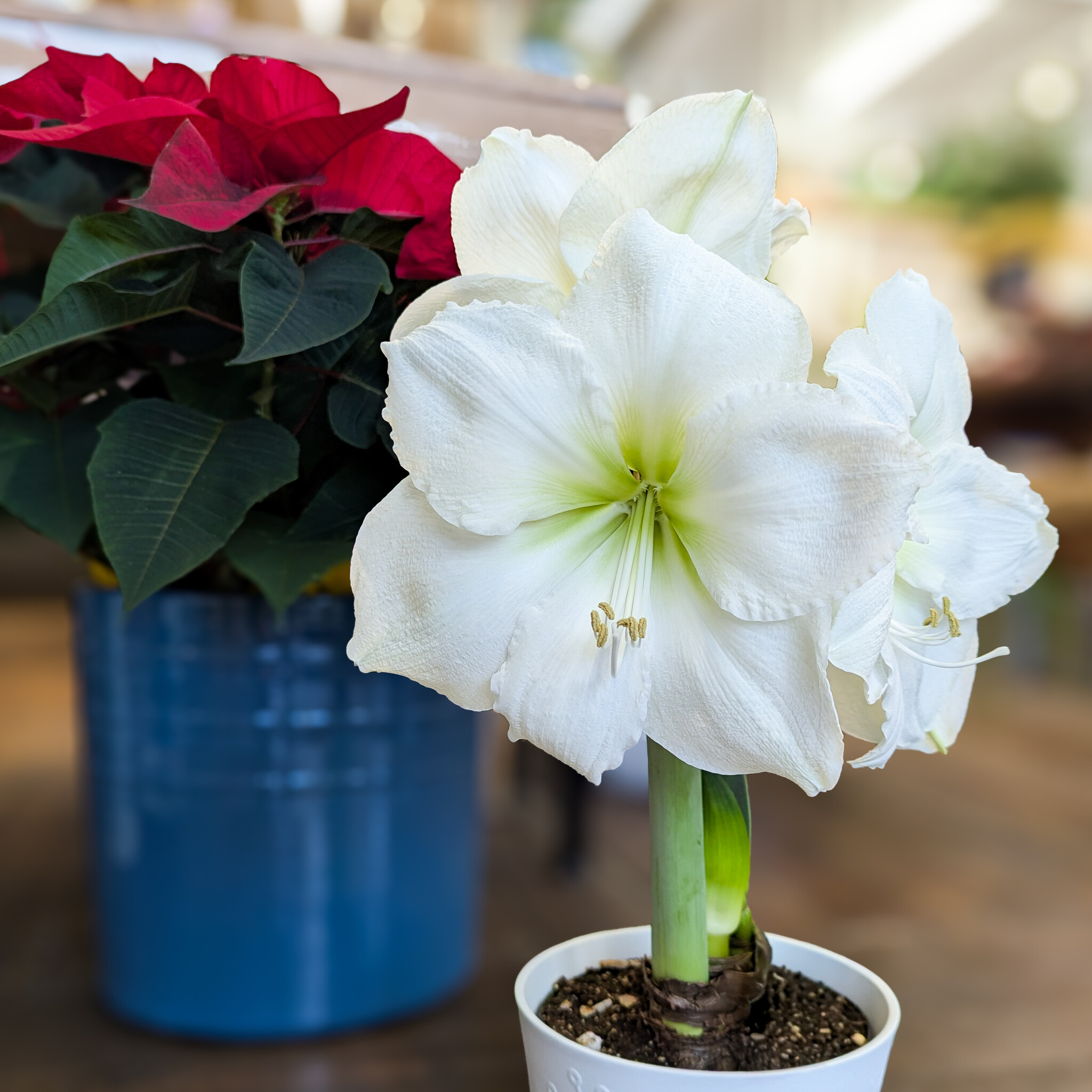
The holidays are here, and our homes are filled with cheerful colour—often thanks to some lovely seasonal houseguests! While we often think of the following seasonal plants as temporary additions, they can last in your home beyond the holiday season if you wish to keep them thriving. Don’t be intimidated; with the following tips, you can keep these plants year-round!
General Winter Houseplant Tips
In Edmonton (or anywhere in the Northern Hemisphere), our plants undergo a significant change in their growing environment once winter hits. The available light decreases dramatically, our homes become very dry and drafty, and temperatures fluctuate. It is beneficial to identify areas in your home that experience the biggest seasonal shifts. Think about the windowsill that was hot and bright all summer, that is now cold, drafty and dark. Or, the perfect corner by the furnace vent, which is now blasted by hot, dry air. Our plants respond to these environmental shifts by reducing their active growth. We all need to hibernate from time to time, including our tropical plant friends!
Here are a few tips to consider for all of your indoor plants this winter:
- Move Them Closer: Winter daylight is weaker and shorter. If your plants are usually happy a few feet from the window, consider moving them closer to a south, west, or east-facing window to soak up as much light as possible.
- Adjust your Watering: Plants naturally slow their growth in winter, meaning they use less water. At the same time, cooler temperatures can lead to slower evaporation of moisture, or warm, dry air from your furnace can cause the soil to dry out quickly. Always check the soil before you water: a general benchmark is to only water once the top inch of soil feels dry to the touch.
- Skip the Fertilizer: Just like watering, plants don't need food while they are in their "rest" period. Resume feeding in spring when you see new active growth. Sometimes, this can be as early as February when the light starts to last noticeably longer.
- Humidity is Key: Forced-air heating dries out the air (and your plants!). Our houses are extremely dry during the winter months. Grouping plants together, placing pots on a pebble tray filled with water, or using a humidifier can boost moisture in the air around them, helping keep your plants happy.
- Avoid Drafts: Keep your plants away from cold blasts from doors and windows, and also from hot, dry air from heating vents or radiators. Consistency is key with houseplants, as drafts can be hard on them.
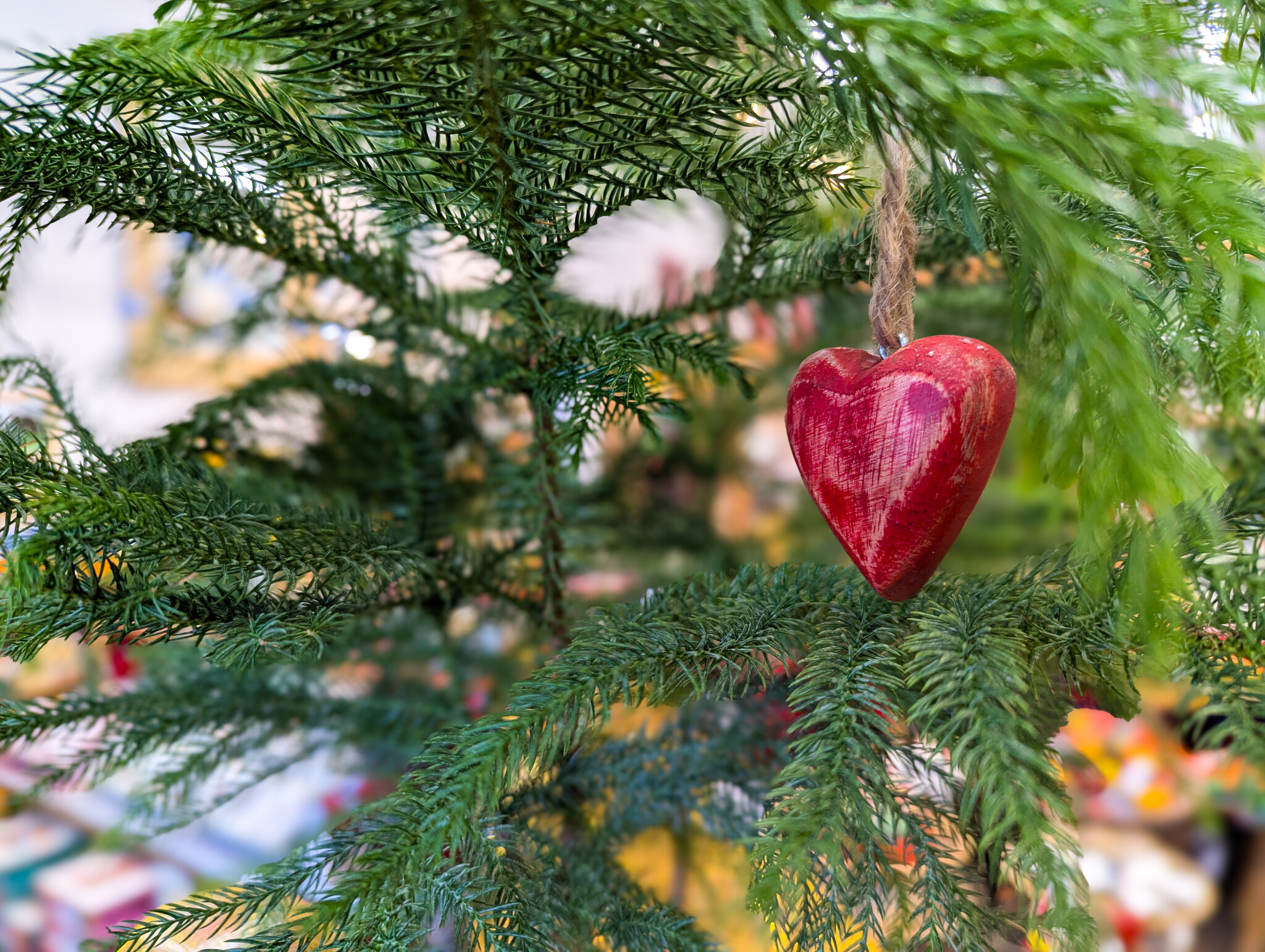
Our Winter Plant Favourites:
Zocalo carries an assortment of both classic and unexpected holiday plants. These plants bring colour, texture and life into our sometimes dreary winter spaces. Here are the care details for some of our most popular winter bloomers:
Poinsettia (Euphorbia Pulcherrima)
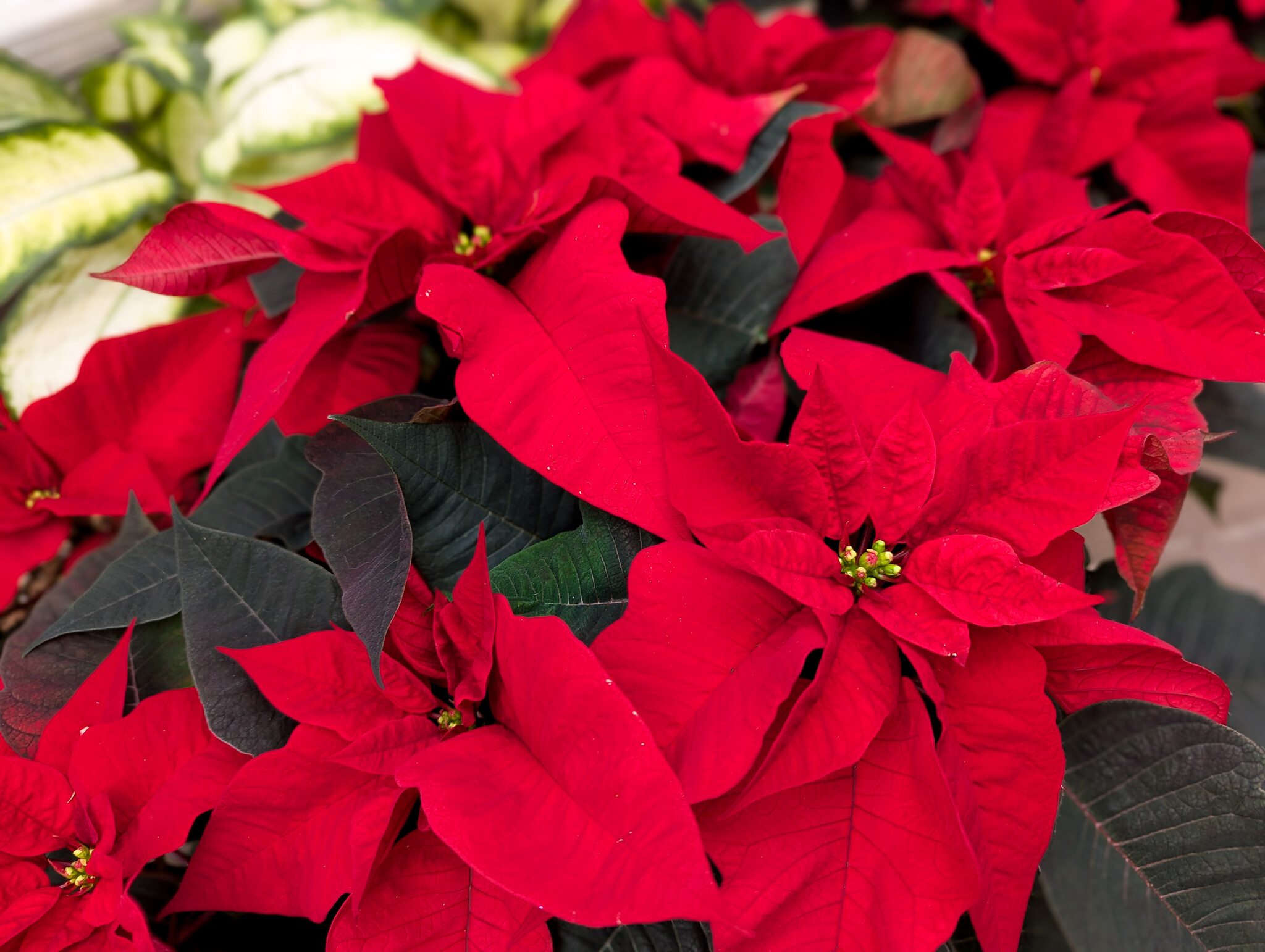
The quintessential holiday plant! Poinsettias are tropical, so they need warmth and bright light to maintain those beautiful, coloured bracts. Many people don’t realize that the showy parts of the poinsettia are actually specialized leaves, and the flower bloom is the small yellow part at the center.
- Light requirements: Bright, indirect light is best (In an east, west, or south-facing window). Short periods of direct light are fine, but extended exposure can scorch the leaves. If you notice this, simply move the plant further away from the window.
- Watering: Water thoroughly only when the top inch of soil feels dry to the touch. It's crucial not to let them sit in standing water, as this will lead to root rot and leaf drop. Always pour off excess water from the saucer. If the plant is wet, DO NOT add more water.
- Temperature: Keep them between 65°F to 75°F (18°C–24°C) during the day, and ideally a few degrees cooler at night. Avoid cold drafts, and keep away from hot, blowing air. Consistency is key with poinsettias for both watering and temperature.
Amaryllis (Hippeastrum)
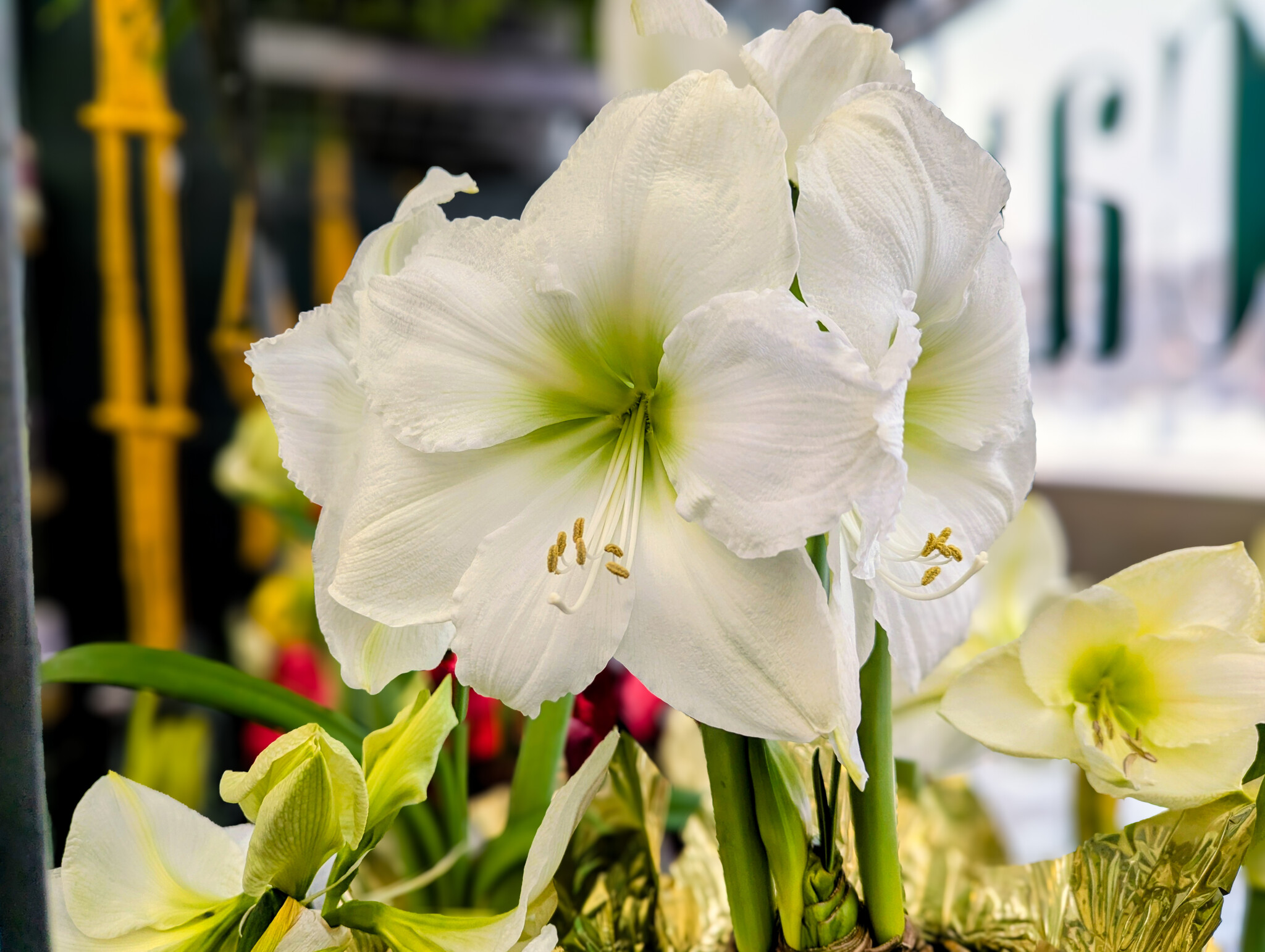
These showstoppers grow from a bulb and produce dramatic, large flowers. They are surprisingly easy to care for once the flower stalk appears.
- Light requirements: Bright, indirect light is best once the flower stalk begins growing. A warm, sunny spot (like a south-facing window) will open the flower, while a cooler spot can extend the bloom period.
- Watering: If your Amaryllis has not begun to bloom and the bulb is still closed, water very sparingly. Once the stem and leaves are actively growing, water when the top 1-2 inches of soil are dry. Rotate the pot every few days to keep the stalk growing straight.
- Post-Bloom Care: Once the flowers fade, cut the spent stalk, but keep the leaves! The leaves gather energy for next year's bloom. Continue watering and fertilizing through spring and summer. Consider placing it in a spot on your patio or yard for maximum photosynthesis from the sun. When the plant’s foliage starts to fade, allow the leaves to die back, cut down on watering and eventually let it dry out. Place your dormant bulb in a cool and dry location until next season.
Holiday Cacti (Shlumbergera)
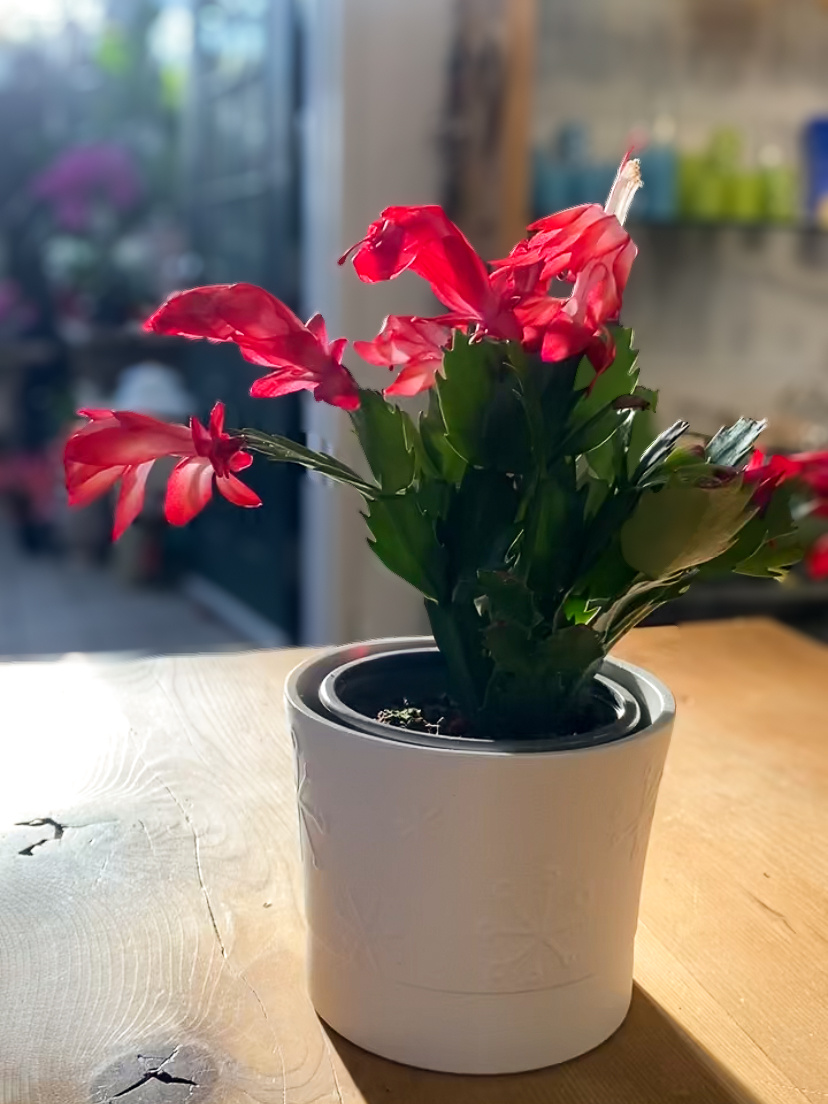
Don’t let their name lead you astray, these are tropical cacti, so they need more water and humidity than a desert cactus, especially when in bloom. This plant grows in small crevices and rocky areas, so it does not need a lot of space in its pot, and will benefit greatly from a well-draining medium. They go through a dramatic blooming period that can last 4 to 8 weeks, then function as a beautiful foliage plant.
- Light requirements: Bright, indirect or filtered light. An east-facing window is often perfect. Direct, intense midday sun can burn the segments. If you notice the green turning reddish or dull, it could be too much light.
- Watering: Water when the top 1-2 inches of soil feels dry to the touch. They like to be kept consistently moist but not soggy. Allowing them to dry out too much can cause bud drop. After your plant is done flowering, you can allow it to go drier in between waterings.
- Blooming Secret: These plants need a dramatic seasonal shift to encourage new blooms. Once your plant has finished its bloom cycle, you can give it a light prune by removing one or two segments from each branch. Continue to water and fertilize appropriately through the spring and summer. To encourage the late-fall/winter bloom, they need cool temperatures (around 55°F–65°F) and 12-14 hours of total darkness each night for several weeks starting in early to mid-fall.
Mistletoe Cactus (Rhipsalis spp)
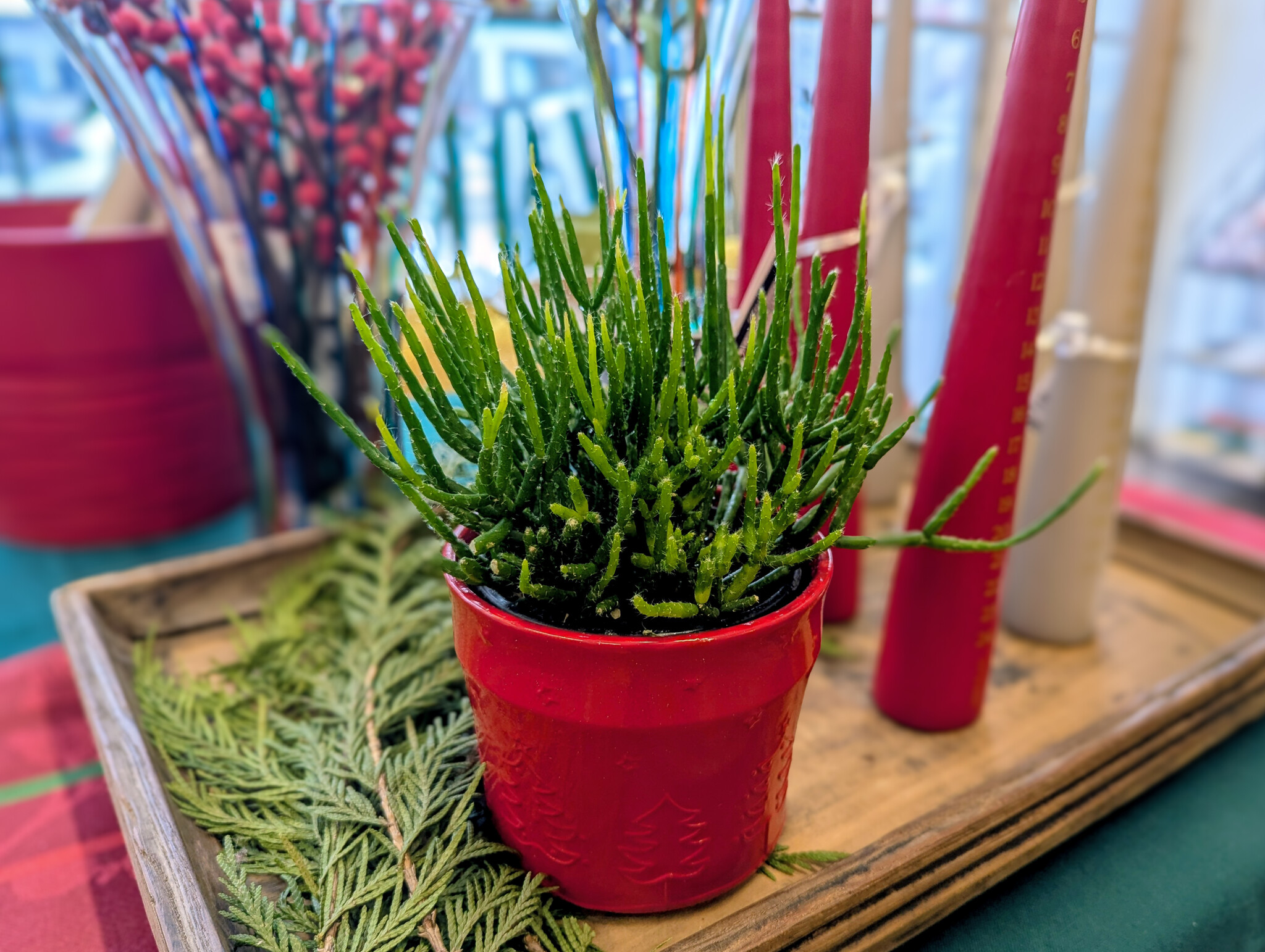
A less common holiday plant, Mistletoe Cactus, might be the plant you have been looking for if you need a low-maintenance houseplant. This plant is grown primarily for its unique foliage, but it can produce small flowers during spring months.
- Light Requirements: Bright, indirect light is best. Bright light will produce an attractive red tinge to the new growth. It can acclimatize to lower light conditions over time, making it a very versatile plant.
- Watering: Allow this plant to dry down between waterings, and then give it a thorough drink. Like its cousin, the Holiday Cactus, this plant benefits from more water than desert cacti. If you notice the segments going limp and dull, it likely needs more watering. If segments start to drop, though, back off on the watering.
- This plant is epiphytic in nature, meaning it prefers a small pot for its small and fine roots.
Norfolk Island Pine (Araucaria heterophylla)
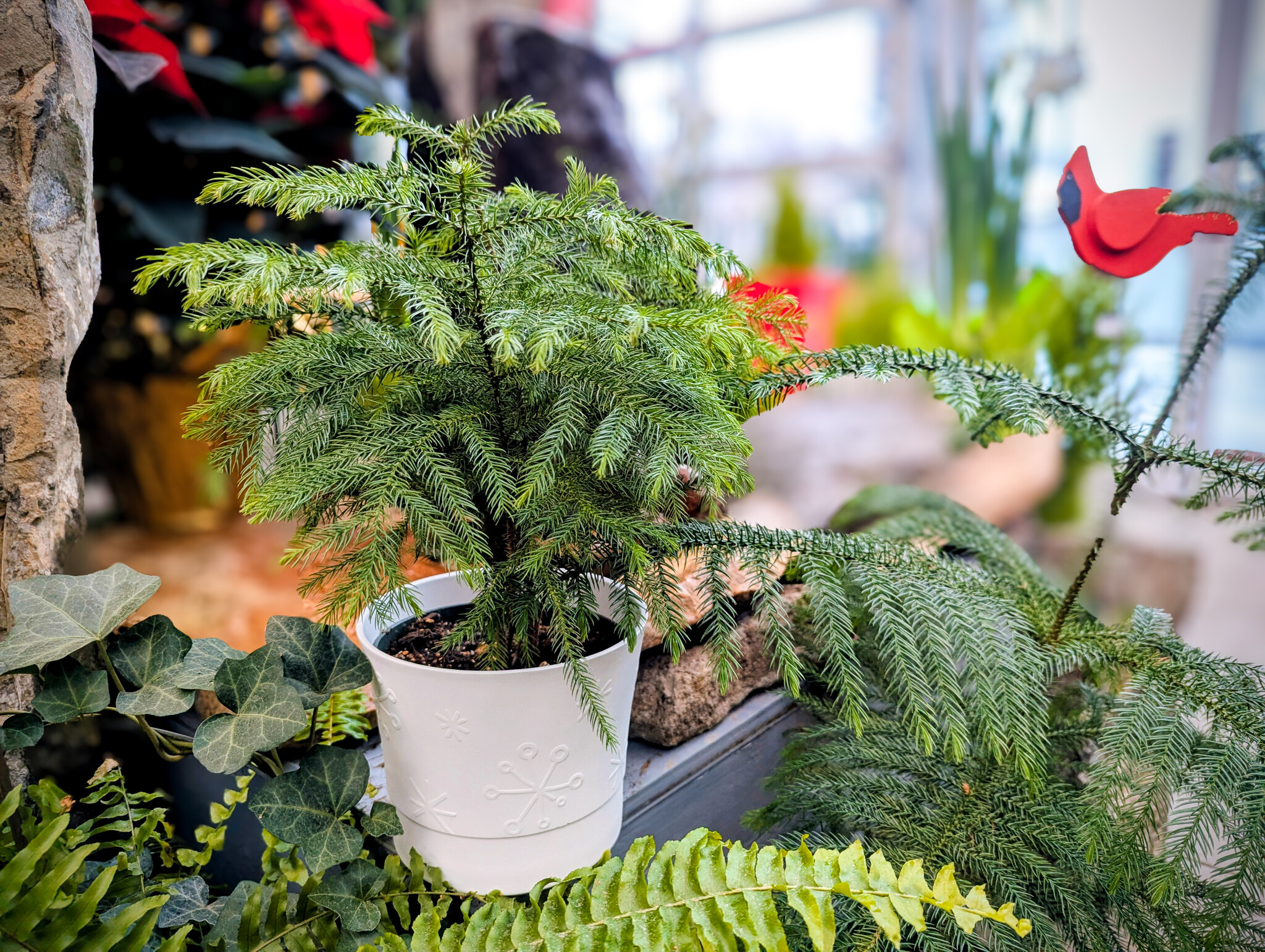
The Norfolk Island pine is a species of conifer tree, although very different from the pine trees we have in Alberta. This is a sub-tropical tree, which means it is not cold-tolerant! This plant functions well as a manageable alternative to a traditional Christmas tree, with the added benefit of being a long-lasting, versatile and eye-catching indoor plant.
- Light Requirements: Because the Norfolk Pine grows natively in a climate that experiences seasonal shifts, although not as dramatic as ours, it is well adapted to the variation in light we experience through the seasons. That being said, Norfolk Pine does require a substantial amount of light and can handle direct sunlight. Place it in the brightest spot in your house.
- Watering: Keep the soil consistently moist, but never allow it to sit in water or remain waterlogged. It is best to water deeply and infrequently, instead of frequent shallow waterings. This plant benefits from high humidity as well. If you notice needles going brown or branches drying out, it may need more water or more consistent watering.
- A potted Norfolk Island Pine only needs to be repotted when it's rootbound, or the roots are beginning to come out of the drainage hole. Young Norfolk Island pines are not very fast growers, so you'll likely only need to repot them every few years. They do benefit greatly from regular fertilizer application when actively growing.
Our long winters allow us to focus on our indoor plants and keep them looking great through many seasons. We are happy to help you find healthy indoor seasonal plants and assist as you learn all the tricks and know-how to be a successful plant parent! Stop by the greenhouse to get a holiday plant that suits you, or check out our other blogs for more plant care information.